
Foreword
Across the UK, communities are facing the growing impacts of extreme weather — from prolonged heatwaves and flash flooding to severe cold spells and storms. These events are becoming more frequent and intense due to the climate crisis, posing serious risks to health, safety, and infrastructure, and causing significant disruption to everyday life.
This information pack has been developed through a collaboration between the University of Leeds, London Resilience Unit (Greater London Authority), the ESRC Vulnerability and Policing Futures Research Centre, and Climate Action Leeds. It is designed to consolidate existing local and national government guidance to support individuals, households and communities in preparing for and responding to extreme weather, wherever they live in the UK.
It is essential to recognise that we are all vulnerable to extreme weather. However, the degree to which we are affected depends on our individual, social, and economic circumstances. Factors such as age, where we live, existing physical and mental health conditions (including neurodivergence, such as autism and ADHD), access to public services, the support we receive from our social networks, and our sense of connection to others in the community all influence how vulnerable we are to different types of extreme weather.
We hope this pack will serve not only as a source of information, but also as a tool to raise awareness about the impacts of the climate crisis and to encourage individuals, households and communities to collaborate, support one another, and take action to prepare for and cope with extreme weather.
Dr Ali Malik University of Leeds
Louisa Cavell London Resilience Unit
Introduction
Flooding is one of the most significant and costly climate-related hazards in the UK. Rising sea levels and more intense rainfall are increasing the frequency and severity of both coastal and inland floods.
One in six properties in the UK is currently at risk of flooding. Flooding causes extensive damage to homes, infrastructure, and public services, with long-term economic and mental health impacts. Flooding is associated with increased rates of depression, anxiety, and post-traumatic stress disorder (PTSD).
as individuals who lack the financial resources or autonomy to implement protective measures, are especially vulnerable to the effects of flooding.
According to the Flood Risk Index, communities in London, Sheffield, and coastal areas of the East Midlands, Yorkshire, and the Humber are among the most vulnerable. Research has shown that many people living in high-risk areas are not signed up to
flood warning systems and lack a clear plan of action.
These mental health
impacts are exacerbated by displacement, property damage, and the stress of
navigating insurance claims and recovery processes.
Older adults, people with disabilities, and renters
– particularly those in social housing – as well
Click here or visit the link below to sign up for flood alerts.
www.gov.uk/sign-up-for-flood-warnings
What to do before
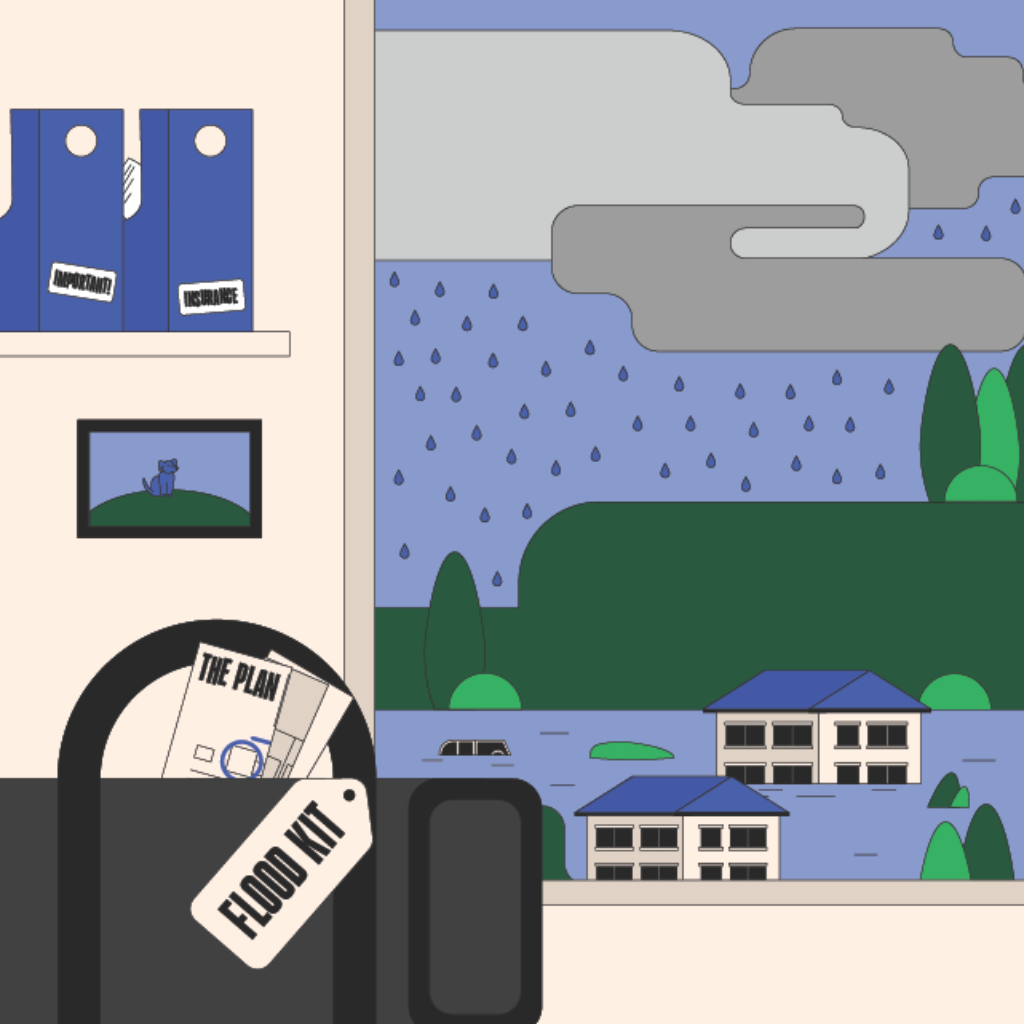
Floods can happen quickly and cause serious damage. Preparing early makes a big difference. Check if your home is in a flood-risk area. Plan where you will go if you need to leave your home. Make sure everyone in your household knows the plan. If you have pets, include them too.
- Put your valuables and important documents on a high shelf to protect them from water damage. Floods can destroy anything. Think about moving items with sentimental value, as well as items you’ve spent a lot of money on.
- Learn how to turn off your water, gas and electricity supply. The location of water stopcocks, gas shut-off valves and electrical master switches varies between properties. If you can’t find these, ask someone with practical experience or a professional to help you.
- Check your household building or contents insurance covers flooding. If your insurance doesn’t cover flooding, FloodRe may be able to help.
- Create a list of useful contact numbers such as your insurance company, landlord, housing association and local council and save these
in your phone. You can use your postcode to find your local council.
- Check drains outside your home and on your street are clear. As a homeowner you have a duty to clear the drains within your property boundary. If you are renter speak to your landlord or housing association.
- Prepare a flood kit with any items you must have if you need to leave home including; medicine, warm/waterproof clothing, a phone charger, ID and essential documents, and a torch. Find out how to prepare a flood kit.
- Becoming a local Flood Warden or helping to set up a Flood Action Group can help you play an important role in building community resilience. • Helping to prepare a community flood plan with the local council and other partners.
Installing home flood defences such as:
- Put in a flood resistant front door, or buy temporary, removable flood barriers for your doors,
- Raise the bottom (the threshold) of your doors,
- Dampproof layer or membrane (also known as tanking),
- Self-closing air bricks, which close automatically during flooding to stop water entering, or watertight covers to put over your air bricks,
- Flood resistant valves to drains and water pipes. These valves close under pressure and stop sewage and dirty water,
- Inflatable bung in the u-bend of your toilet. This stops flood water coming up through the toilet,
- Special draining system for cavity walls,
- Tiles fixed with waterproof adhesive and grout are better than fitted carpets,
- Fix shelves high up on walls. If you have valuable or important items that you cannot move to another floor or storey, keep them on a high shelf,
- Raise electrical equipment like sockets, fuse boxes, TVs or home equipment to at least 1.5 meters (5 feet) from the floor,
- Water-resistant skirting boards, or you can varnish them,
- Hard wood or synthetic windows and doors. You can also wax or varnish them,
- Use water-resistant materials, such as stainless steel, plastic, solid wood,
- If you can, raise your fridge and other appliances by putting them on a plinth,
- Water pump – such as a puddle pump – to divert or remove small amounts of water from your home.
Prepare a community flood plan
A community flood plan helps to prepare you and your local community, so you know what to do in the event of a flood.
- Ensure you have the relevant activities and actions mapped out in your Community Emergency Plan, so you know what to do when flooding occurs.
- Think how information will be communicated to residents and emergency services during a flood.
- Describe or map emergency routes and evacuation points.
- List contact information and locations of residents (who need help and who could provide help).
- List volunteers and their contact information.
- Think about how to scale up your response if a flood gets worse.
- Include a list of locations at risk of flooding, their trigger level and actions to take, any equipment you might need.
What to do during
During a flood acting quickly can help protect your home, your belongings, and the safety of yourself and those around you. Taking early steps can reduce damage and risk. It’s also vital to follow official advice, stay connected with your community, and be ready to put your community flood plan in action.
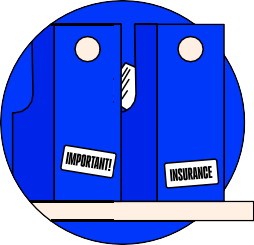
Keep important documents, medicines, and essentials in a waterproof bag, above flood water levels.
Immediately before flooding:
- Turn off electricity, water and gas supplies.Lift curtains over rails above flood water levels.Use any measures you have to stop water entering your property, such as door guards or air brick covers.Move important items to safety.Lift rugs and smaller furniture upstairs or on to tables or worktops if possible.Get your flood kit together and prepare to move from your home.Move your pets and car away from flood areas if possible.Make sure your mobile phone or devices are charged.
- Follow warnings, information and advice issued by authorities.
- Activate your community emergency plan and your flood wardens.
- Do not walk or drive through flood water, as it may conceal hidden dangers, do not put
yourself or others at risk, take your flood kit with you if you directed to an evacuation centre.
- If your home is flood damaged and you’re not able to live there, contact your local council for help getting emergency accommodation.
- Communicate flood updates with your community.
- Support wider activities where appropriate and safe, such as door knocking to check in on neighbours.
- Activate a community space or venue to support community flood response.
What to do after
After a flood, safety comes first. Avoid returning home until it’s declared safe, and never touch electrical items if they may be water-damaged.
Once inside, document the damage, contact your insurer, and begin cleaning with protective gear. Check in on neighbours, especially those who may need extra support, and stay informed through official channels for recovery advice and assistance.
Returning home:
- Remember that flood water may contain sewage and conceal hidden dangers.
- You may need gas or electricity engineers to check your supply before turning it on.
- Throw away items damaged by flood water in an appropriate manner after your property and items have been checked by a loss adjuster.
- Don’t eat food that’s been touched by flood water. Also, throwing away food from a fridge if the electricity has been off for more than 4 hours or a freezer for more than 24 hours.
- Not using tap water if you notice a change in the colour, taste or smell – contact your water company if this happens.
- If you need support with your mental health:
- Speak to your friends and family,
- Speak to your doctor or check the NHS website to find where you can get urgent help for mental health.
- Do not return to your home until you are told it is safe to do so.
- Check on neighbours, especially those who are elderly or have mobility issues.
- Wear appropriate waterproof or protective clothing when cleaning up.
- Insurance:
- Contact your insurance company to start the claims process,
- Take photos of any damage and the flood water line,
- If you rent your property, contact your landlord and contents insurance company.
Prepare a flood kit containing warm, waterproof clothing, a phone charger, a torch, any important documents and any medicines and prescriptions.
Additional Sources of Information
The development of this information pack was funded by the University of Leeds Research Equity, Diversity and Inclusion (REDI) Fund and is a collaboration between the University of Leeds, the London Resilience Unit, the ESRC Vulnerability
and Policing Futures Research Centre, and Climate Action Leeds.
The London Resilience Unit is part of the Greater London Authority, and delivers and coordinates resilience services on behalf of the London Resilience Partnership and London Local Authorities.
The research underpinning this project, Policing and community resilience in the context of climate change, was funded by the ESRC Vulnerability and Policing Futures Research Centre.
The final report for the project can be accessed here: vulnerabilitypolicing.org.uk/ policing-and-community-resilience-in-the-context-of-climate-change/
- The London Community Resilience Toolkit londonemergenciestrust.org.uk/sites/default/ files/uploads/London-Community-Resilience-Toolkit-2025_0.pdf
- UK Government: Prepare for emergencies
- Leeds City Council: Heat in the City observatory.leeds.gov.uk/wp-content/ uploads/2025/06/Director-of-Public-Health-Annual-Report-2025-Heat-in-the-city.pdf
- Met Office: Seasonal advice weather.metoffice.gov.uk/warnings-and-advice/ seasonal-advice
- Would you survive 72 hours?
- BeFloodReady
- Communities Prepared
www.communitiesprepared.org.uk/
Project Team
Dr Ali Malik, University of Leeds
Louisa Cavell, Greater London Authority
Caroline Bjørnstad, Researcher, University of Leeds
Project Partners
University of Leeds, Greater London Authority, ESRC Vulnerability and Policing Futures Research Centre, Climate Action Leeds
2 Flooding Climate Resilience Guidance 3
Climate Action Leeds