
Batteries are made using toxic chemicals, which can leak out when the battery “expires”. This chemical:
- Can burn the skin
- Can lead to breathing difficulties if the sulphuric acid fumes are inhale
- Can lead to blindness if it gets into the eyes
- Can be life threatening if ingested
Source: ReAgent Chemicals
What to do if you make contact with battery acid?
Wash the burn with clean running water.
If the burn is larger than a 50p coin, take the patient to A&E for proper medical attention.
The battery itself can also ignite if put under too much pressure or heat. This has occured in 2 recycling centers (see BBC articles Here & Here) where batteries had been improperly disposed of
How to dispose of batteries properly
Source: HM GOV website
Batteries should not be placed with other household rubbish.
Most local supermarkets will have collection points for batteries where they can be recycled to gather valuable metals and avoid catastrophes such as above.
In general, if a product should not be disposed of in household waste, it will have 1 of the following stickers on it:
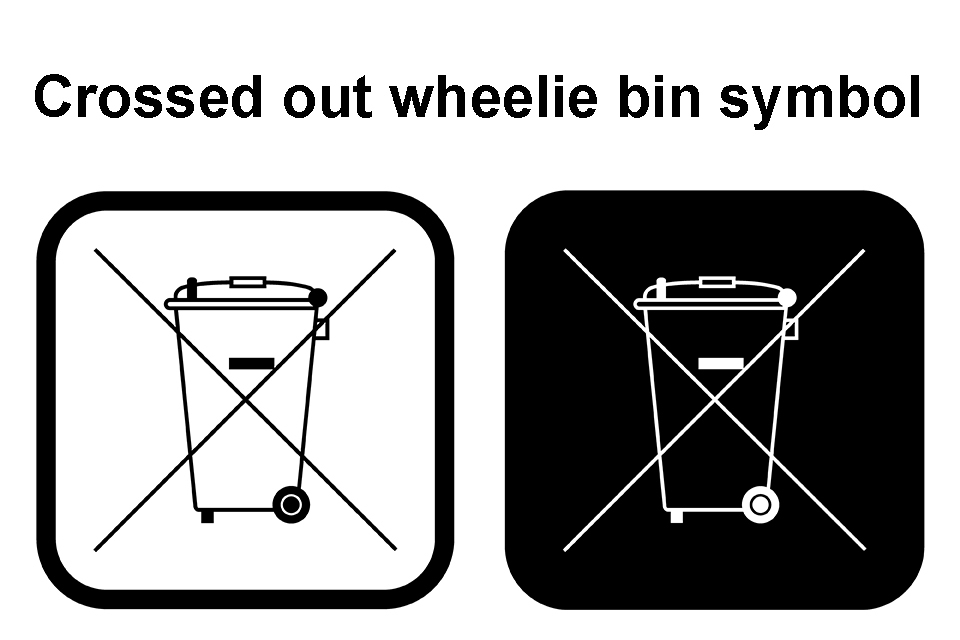
These signify that the product has special requirements to be disposed of safely and effectively.