
Foreword
Across the UK, communities are facing the growing impacts of extreme weather — from prolonged heatwaves and flash flooding to severe cold spells and storms. These events are becoming more frequent and intense due to the climate crisis, posing serious risks to health, safety, and infrastructure, and causing significant disruption to everyday life.
This information pack has been developed through a collaboration between the University of Leeds, London Resilience Unit (Greater London Authority), the ESRC Vulnerability and Policing Futures Research Centre, and Climate Action Leeds. It is designed to consolidate existing local and national government guidance to support individuals, households and communities in preparing for and responding to extreme weather, wherever they live in the UK.
It is essential to recognise that we are all vulnerable to extreme weather. However, the degree to which we are affected depends on our individual, social, and economic circumstances. Factors such as age, where we live, existing physical and mental health conditions (including neurodivergence, such as autism and ADHD), access to public services, the support we receive from our social networks, and our sense of connection to others in the community all influence how vulnerable we are to different types of extreme weather.
According to the Met Office, the average duration of warm spells has more than doubled.
We hope this pack will serve not only as a source of information, but also as a tool to raise awareness about the impacts of the climate crisis and to encourage individuals, households and communities to collaborate, support one another, and take action to prepare for and cope with extreme weather.
Introduction
The UK is experiencing hotter, longer, and more frequent heatwaves. In 2022, temperatures exceeded 40°C for the first time, marking a shift from rare extremes to a new climate norm.
According to the Met Office, the average length of warm spells has more than doubled, from 5 days to over 13 days. During five heat periods between June and August 2022, there were 3,271 excess deaths (this means deaths above the number normally expected for that time of year, based on recent years’ averages) in England and Wales. Of these, 2,803 were among people aged 65 and over.
Extreme heat can make existing health problems worse. It can also increase anxiety, cause sleep problems, and lead to social isolation, especially for people with mental health conditions (such as depression or anxiety disorders) or limited mobility. Older adults, people with long-term health conditions, and those living in poorly ventilated or overcrowded homes are most at risk during heatwaves.
Urban areas with high population density and limited green space – such as parts of London, Birmingham, and Manchester – are particularly vulnerable to the urban heat island effect. Many people do not perceive themselves to be at risk, and our preparation to cope with extreme heat remains low.
What to do before
Activate a community space or venue as a ‘cool space’ for your community.
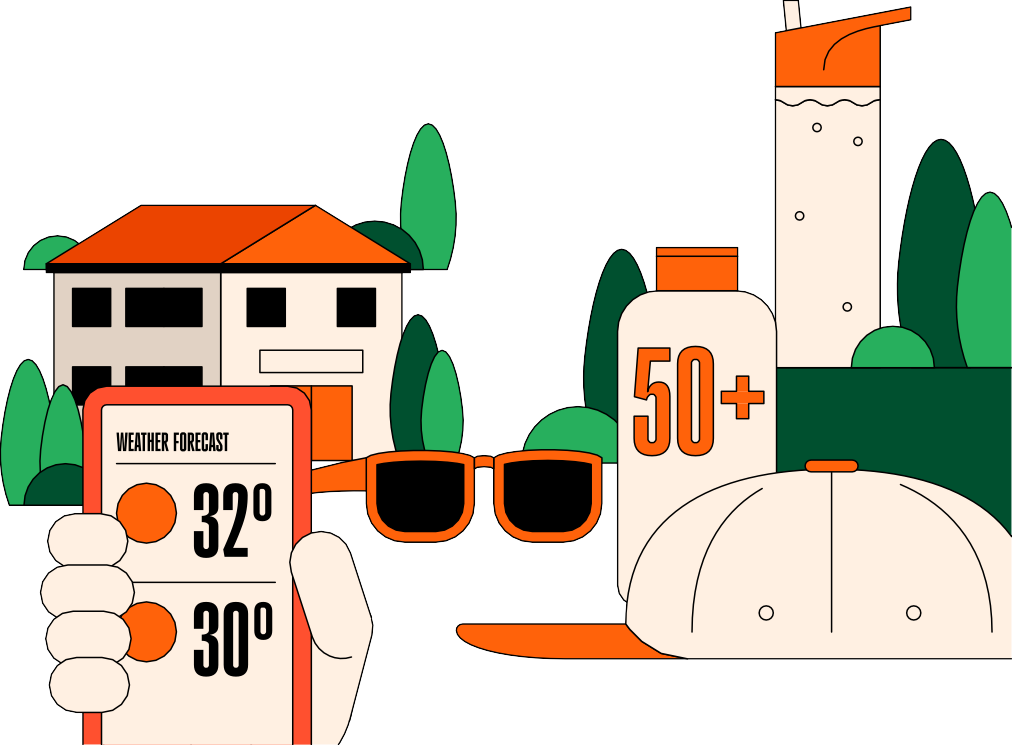
Heatwaves are becoming much more common, and they often last longer during the summer months. High temperatures can affect your health, your home, and your community. Preparing in advance helps keep you, your family, and your communities safe. Here’s what you need to do to stay safe during hot spells.
- Plan ahead:
- Check the weather forecast and the news
- Schedule activities to cooler times of the day (plan to stay in the shade or somewhere cool between 11am and 3pm).
- Think about what resource you might need, e.g. extra water, sunscreen.
- Sign up to and monitor weather alerts: Weather alerts are messages that tell you about important changes in the weather. They help you know if there will be storms, heavy rain, snow, or other extreme weather. By signing up for these alerts, you can get information quickly on your phone or computer. This helps you stay safe and make plans to avoid bad weather.
- Plan a seasonal awareness campaign to prepare your community for hot weather and ensure you have the relevant activities and actions mapped out in your Community Emergency Plan, so you know what to do when the heatwave arrives – outlined under Community Emergency Plan.
- Community groups should:
- Create a seasonal awareness campaign to prepare your community for hot weather.
- Add these activities and actions to your Community Emergency Plan.
- Give your community clear advice and information about staying safe in hot weather.
- Think about adding shade (e.g., trees, shelters) and water features (e.g., fountains, refill stations) in community spaces.
Know the symptoms of heat exhaustion and heatstroke:
- Tiredness
- Weakness
- Feeling faint
- Headache
- Muscle cramps
- Feeling or being sick
- Heavy sweating
- Intense thirst
- Confusion
- Lack of co-ordination
- Fast heartbeat
- Fast breathing or shortness of breath
- Hot skin that is not sweating
- Seizures
If you notice any of these symptoms, move to a cool, shaded place, loosen clothing, and drink cool water or a sports drink. If symptoms such as confusion, difficulty speaking, or a high temperature develop, or if there is no improvement within 30 minutes, call 999 immediately.
Activate a community space or venue as a ‘cool space’ for your community.
In London, the ‘Cool Spaces’ initiative provides safe, welcoming environments where people can rest, recover, and stay cool during hot weather.
Click here find out more about the London ‘Cool Spaces’ initiative.
What to do during
As extreme heat becomes more common, knowing how to respond can not only protect your health and that of your family, but also help support the wellbeing and resilience of your community. During high temperatures, follow these steps to stay safe and help those around you.
Check that your sunscreen bottle says 30+ UPF. The higher the number the better!
- Wear Loose clothes, a hat and sunglasses.
- Drink lots of water and avoid alcohol. Carry water with you at all times to stay hydrated.
- Use sunscreen – Check that the bottle says 30+ UPF. A number bigger than 30 is even better.
- Keep your home cool by closing blinds and curtains on windows that are exposed to direct sunlight during the day. It may be better to keep windows closed during the hottest parts of the day to keep the heat out, opening them when the air feels cooler outside, for example at night, and try to get air flowing through your home.
- Limit time outside and limit physical activity, by deciding whether it is safe to go ahead with any activities based on the heat. Try to keep out of the sun between 11am to 3pm, when the UV rays are strongest.
- Never leave anyone in a closed, parked vehicle, especially infants, young children or animals.
- Community groups and private businesses could:
- Offer cold water and refuge from the sun during hot weather
- Turn a local venue into a ‘Cool Space’ and let your community know about it. Cool Spaces give people a safe, welcoming place to shelter, rest. They are not a replacement for wider support services or medical care, but they can signpost people to help and encourage involvement in community resilience activities.
What to do after
After a heatwave has passed, it’s also a good time to reflect on what worked, what didn’t, and how you can better prepare for future extreme heat, and what you can do to help your community:
- Check on vulnerable people such as older adults, those with chronic illnesses, and neighbours who live alone.
- Continue to stay hydrated and avoid alcohol or caffeine, which can dehydrate you.
- Cool your home by opening windows at night and using fans if the temperature is below 35°C.
- Watch for signs of heat-related illness, such as dizziness, confusion, or nausea. Seek medical help if symptoms persist.
- Report housing issues (e.g. overheating in rented homes) to your local council’s environmental health team.
Continue to stay hydrated and avoid alcohol or caffeine, which can dehydrate you.
Click here or visit the link below to find out what to do if you have heat exhaustion or heat stroke
researchbriefings.files. parliament.uk/documents/ POST-PN-0723/POST-PN-0723.pdf
Additional Sources of Information
The development of this information pack was funded by the University of Leeds Research Equity, Diversity and Inclusion (REDI) Fund and is a collaboration between the University of Leeds, the London Resilience Unit, the ESRC Vulnerability
and Policing Futures Research Centre, and Climate Action Leeds.
The London Resilience Unit is part of the Greater London Authority, and delivers and coordinates resilience services on behalf of the London Resilience Partnership and London Local Authorities.
The research underpinning this project, Policing and community resilience in the context of climate change, was funded by the ESRC Vulnerability and Policing Futures Research Centre.
The final report for the project can be accessed here: vulnerabilitypolicing.org.uk/ policing-and-community-resilience-in-the-context-of-climate-change/
Project Team
Dr Ali Malik, University of Leeds
Louisa Cavell, Greater London Authority
Caroline Bjørnstad, Researcher, University of Leeds
Project Partners
University of Leeds, Greater London Authority, ESRC Vulnerability and Policing Futures Research Centre, Climate Action Leeds Urban areas with high population density and limited green space – such as parts of London, Birmingham, and Manchester – are particularly vulnerable to the urban heat island effect. Many people do not perceive themselves to be at risk, and our preparation to cope with extreme heat remains low.
Click here or visit the link below to view the public impacts of heat report.
researchbriefings.files. parliament.uk/documents/ POST-PN-0723/POST-PN-0723.pdf
- The London Community Resilience Toolkit londonemergenciestrust.org.uk/sites/default/ files/uploads/London-Community-Resilience-Toolkit-2025_0.pdf
- UK Government: Prepare for emergencies prepare.campaign.gov.uk/
- Leeds City Council: Heat in the City observatory.leeds.gov.uk/wp-content/ uploads/2025/06/Director-of-Public-Health-Annual-Report-2025-Heat-in-the-city.pdf
- Met Office: Seasonal advice weather.metoffice.gov.uk/warnings-and-advice/ seasonal-advice
- Would you survive 72 hours? 72tuntia.fi/en/
- BeFloodReady www.befloodready.uk/
- Communities Prepared www.communitiesprepared.org.uk/


Climate Action Leeds